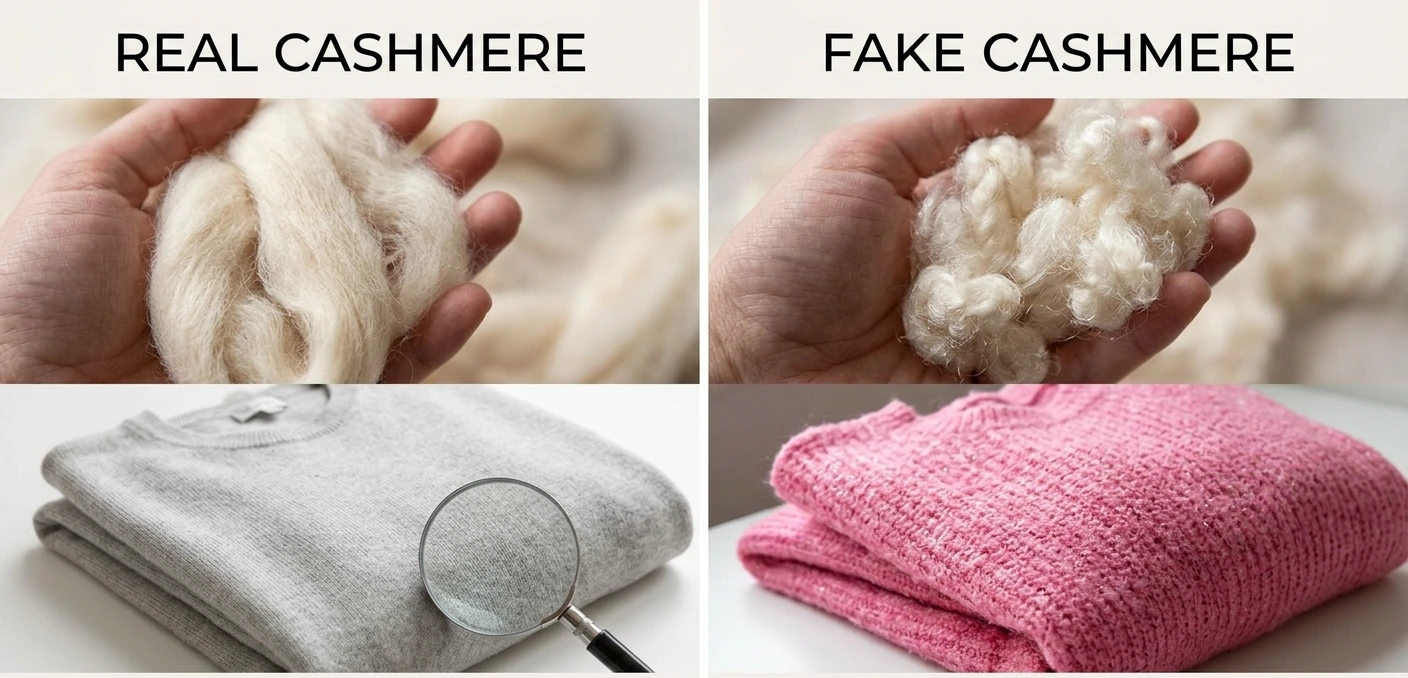
What Real Cashmere Actually Is
Genuine cashmere comes from one source only: the soft undercoat of cashmere goats. These goats live primarily in Mongolia, China, Afghanistan, and parts of Iran. They grow a dense, fine undercoat during winter to protect themselves from extreme temperatures. Each spring, herders comb this undercoat by hand. Each goat yields only around 100 to 200 grams of usable fibre per year.
The raw fibre is then sorted, cleaned, and processed to separate the finest fibres from coarser guard hairs. What remains are fibres typically between 14 and 19 microns in diameter. This extreme fineness is what gives real cashmere its distinctive softness and warmth.
No other animal produces this specific fibre. No factory process can fully replicate it. When a garment is labelled 100 percent cashmere, it should contain nothing else.
What Fake Cashmere Is Made From
Fake cashmere is not a single material. It covers a wide range of products that are sold as cashmere but are made from something else entirely. The most common substitutes include the following.
Cashmere blends with undisclosed content are perhaps the most common form of deception. A garment might contain 20 percent cashmere blended with 80 percent acrylic, but be labelled simply as cashmere.
Why Fake Cashmere Is So Common
The price difference is the obvious answer. Raw Grade A Mongolian cashmere costs around 80 to 150 pounds or dollars per kilogram to source. Processed cashmere yarn is even more expensive. Acrylic costs a fraction of that.
If a manufacturer can blend a small amount of cashmere with a large amount of acrylic, treat the blend with chemical softeners, label it as cashmere, and sell it at a price that seems like a bargain, many consumers will not know the difference.
The demand for affordable luxury has driven this problem. As more brands have tried to offer cashmere at lower price points, the quality and authenticity of the fibre has often been compromised to make the numbers work.
How to Tell Real Cashmere from Fake: 7 Tests
You do not need specialist equipment to check whether cashmere is genuine. These tests can all be done before or shortly after purchase.
How to Read a Cashmere Label
The label on a garment is your first line of defence, though it is not always reliable on its own. A genuine 100 percent cashmere garment should say exactly that.
Good signs
- 100% Cashmere is listed clearly
- The country of origin is shown
- Care instructions are specific and realistic
Red flags
- Pashmina used without a fibre breakdown
- Cashmere blend with no percentage listed
- Cashmere feel, cashmere-like, or luxury fibre
- Vague terms like soft blend instead of material details
How Real and Fake Cashmere Perform Over Time
The differences between real and fake cashmere become most obvious after the first few washes. Genuine cashmere, properly cared for, maintains its softness and often becomes softer over time as the fibres settle.
Synthetic and blended cashmere degrades much more quickly. The initial softness washes out after the first few laundry cycles, revealing the coarser fibre underneath. Acrylic pills heavily and persistently. The garment loses its shape, the colours fade, and the fabric can start to look worn within a single season.
Where Fake Cashmere Is Most Commonly Found
Budget fashion retailers, online marketplaces, and tourist markets are the places where mislabelled or fake cashmere is most commonly sold. This does not mean every affordable product is fake, but these are the environments where extra caution is warranted.
Reputable cashmere brands with transparent supply chains are the safest option. If a brand can tell you where the fibre comes from, what grade it is, and how many microns the individual fibres measure, that level of transparency is a strong indicator of authenticity.
Frequently Asked Questions
The Bottom Line
Knowing how to spot real cashmere from fake cashmere before you buy is one of the most useful skills any cashmere owner can have. The safest approach is to combine the label check, the touch test, and the price test before making a purchase.
Real cashmere should feel warm, soft, and beautifully light. If the garment feels synthetic, smells chemical, or is priced far below market rate, trust that instinct and look more closely.